
St. Michael’s Cathedral
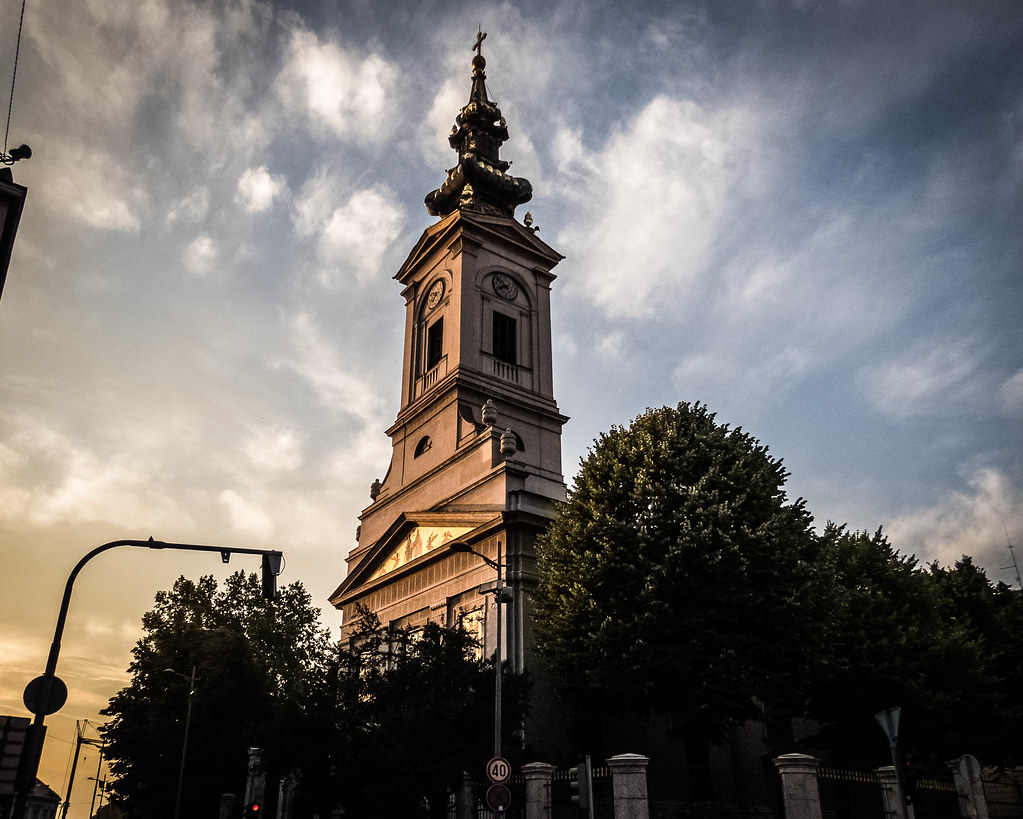
The Cathedral Church of St. Michael the Archangel is a Serbian Orthodox cathedral church in the centre of Belgrade, Serbia, situated in the old part of the city, at the intersection of Kralja Petra and Kneza Sime Markovića streets. It was built between 1837 and 1840, on the location of an older church also dedicated to Archangel Michael. It is one of the most important places of worship in the country. It is commonly known as just Saborna crkva (The Cathedral) among the city residents. It was proclaimed as a Cultural Monument of Exceptional Importance in 1979.
The Cathedral Church is one of the few preserved monuments of Belgrade from the first half of the 19th Century. During the times when new social and political structures were slowly emerging, the Cathedral Church became a central support in the independence fight from Turkish centralism to the final freedom from Ottoman rule.

The cathedral was built between 1837 and 1840. The gold-plated carved iconostasis was made by the sculptor Dimitrije Petrović, while the icons on the iconostasis, thrones, choirs and pulpits, as well as those on the walls and arches were painted by Dimitrije Avramović, one of the most distinguished Serbian painters of the 19th century.
Today’s Building of the Patriarchate was built from 1934 until 1935 and designed by architect Viktor Lukomski. It is located across Saborna Crkva. The building has a square base, it is solid and has monumental forms. On the main facade, against the Cathedral Church, an impressive portico stands out, with low columns and an arched portal above which is a sculpted coat of arms of the Serbian Orthodox Church. On the top of this facade, in a niche, is a mosaic composition representing St. John the Baptist. In the east part of the building, there is a chapel dedicated to St. Simeon. It contains a carved iconostasis, the work of Ohrid masters, bearing icons painted in 1935 by Vladimir Predojević. Cathedral Church of St. Michael the Archangel was declared Monument of Culture of Exceptional Importance in 1979, and it is protected by Republic of Serbia. The Library and Museum of Serbian Orthodox Church are in this building, too.